Primary buying guide

Best Portable Power Stations

Start with how you will use the battery. The best compact travel unit and the best home-backup base solve very different problems, even when both are called portable power stations.

Choose by need

Quick picks

Choose around the devices you actually need to power

Start with your highest-power device — it sets the minimum continuous output you need. Then decide how long you want it to run, which points to the battery capacity (watt-hours) you should look for.

Don't buy bigger just for "maybe someday"

More capacity and output usually mean more weight and cost. A smaller unit is far easier to carry for camping or everyday backup, while expansion matters more if you plan sustained home or off-grid use.

Buying recommendations

The 11 best portable power stations by buyer need

11 products

#1
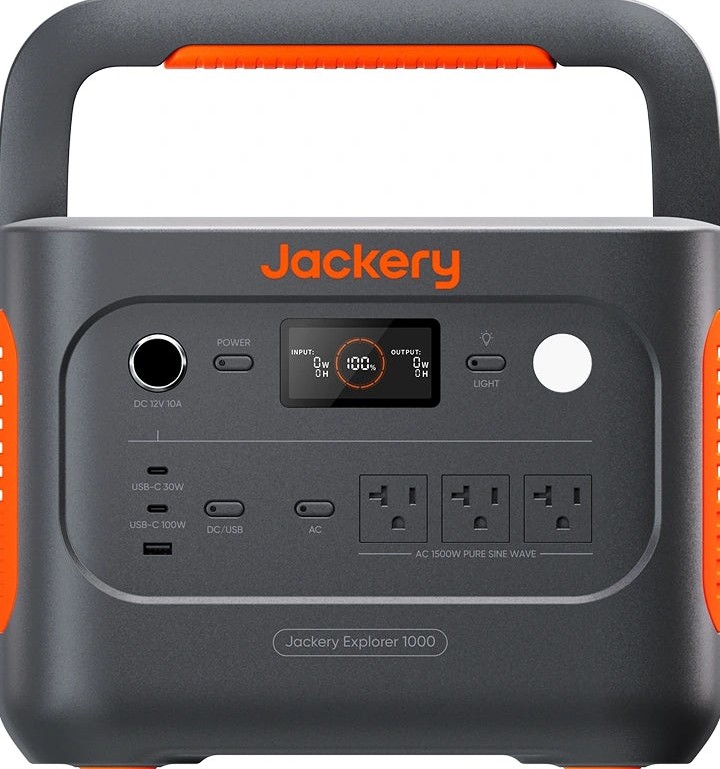
Jackery Explorer 1000 v2 product imageJackery Explorer 1000 v2 product image 2

Jackery

Best Overall

Explorer 1000 v2

Why choose it The most balanced unit in the catalog for a first-time buyer - 1,070 Wh and 1,500 W continuous in a 23.8 lb body.

Capacity1,070 Wh
Continuous output1,500 W
Weight23.8 lb
Solar input400 W

Watch out for Not expandable, so runtime is fixed at the base capacity; 1,500 W will not start every appliance.

#2
DJI Power 500 product image

DJI

Best Lightweight / Small Loads

Power 500

Why choose it Lightest pick with full 1,000 W continuous output - 16.1 lb for 512 Wh.

Capacity512 Wh
Continuous output1,000 W
Weight16.1 lb
Solar input300 W

Watch out for 512 Wh suits phones, lights and small devices, not multi-day or fridge loads.

#3
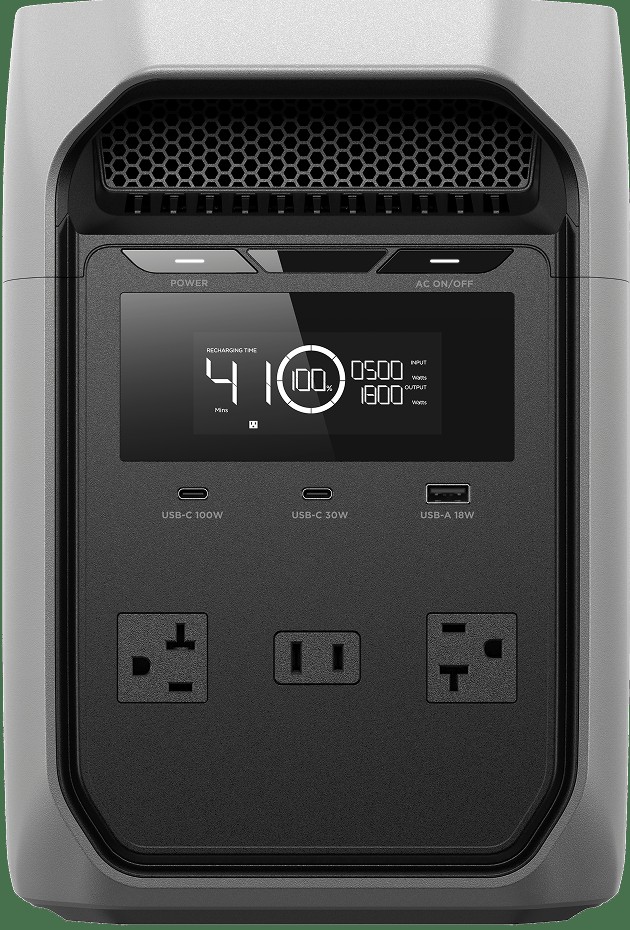
EcoFlow DELTA 3 Plus product image

EcoFlow

Best for Fast Solar Recharge

DELTA 3 Plus

Why choose it Joint-highest documented solar input among the 1,024 Wh units here (1,000 W, matched only by BLUETTI Elite 100 V2), plus 1,800 W continuous output.

Capacity1,024 Wh
Continuous output1,800 W
Weight27.6 lb
Solar input1,000 W

Watch out for At 27.6 lb it is a basecamp unit, not a carry-one-hand unit.

#4
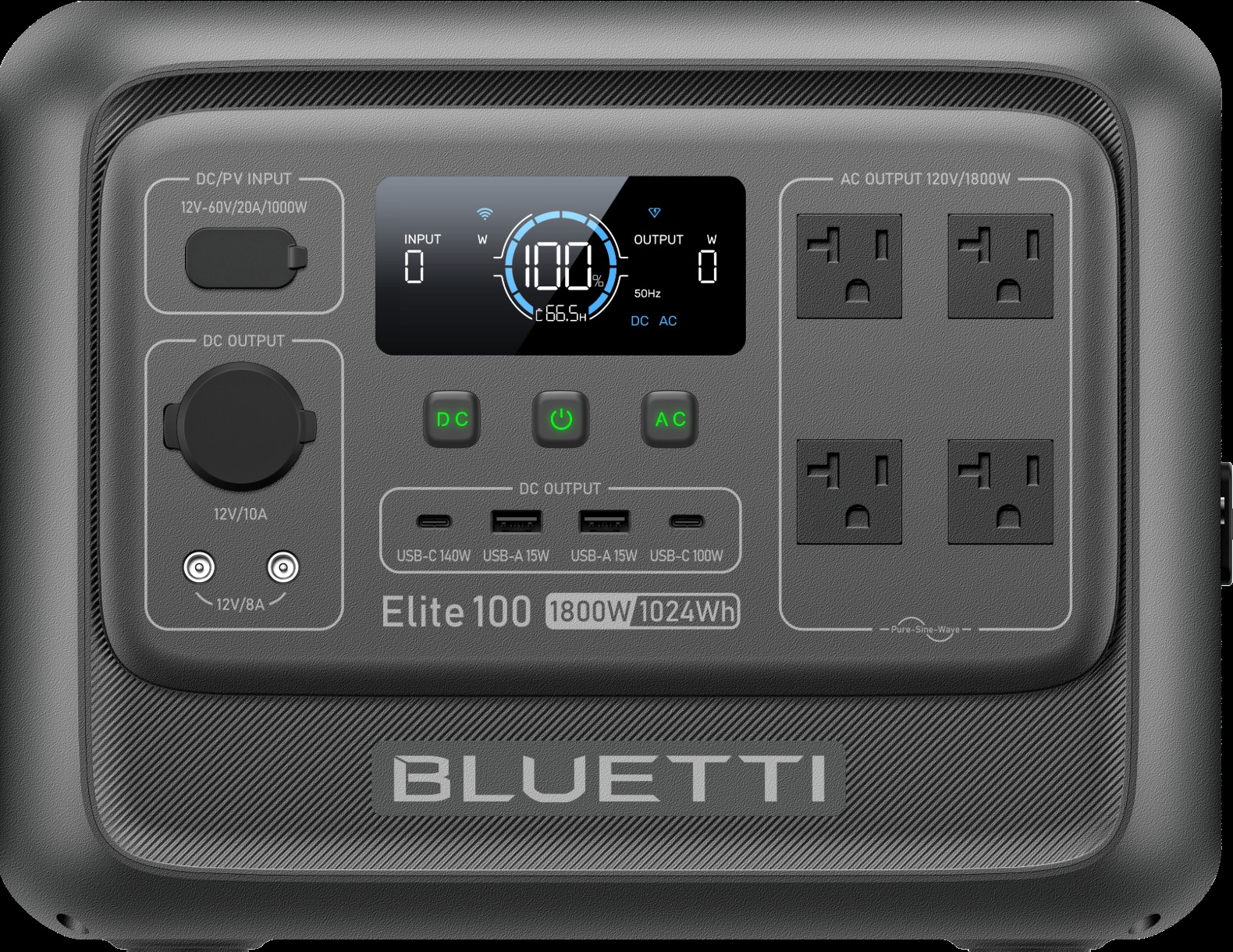
BLUETTI Elite 100 V2 product imageBLUETTI Elite 100 V2 product image 2

BLUETTI

Best Compact Unit That Can Grow

Elite 100 V2

Why choose it 1,024 Wh / 1,800 W in 25 lb and accepts expansion batteries.

Capacity1,024 Wh
Continuous output1,800 W
Weight25 lb
Solar input1,000 W

Watch out for BLUETTI does not publish a maximum battery count, so total expanded capacity is not documented.

#5
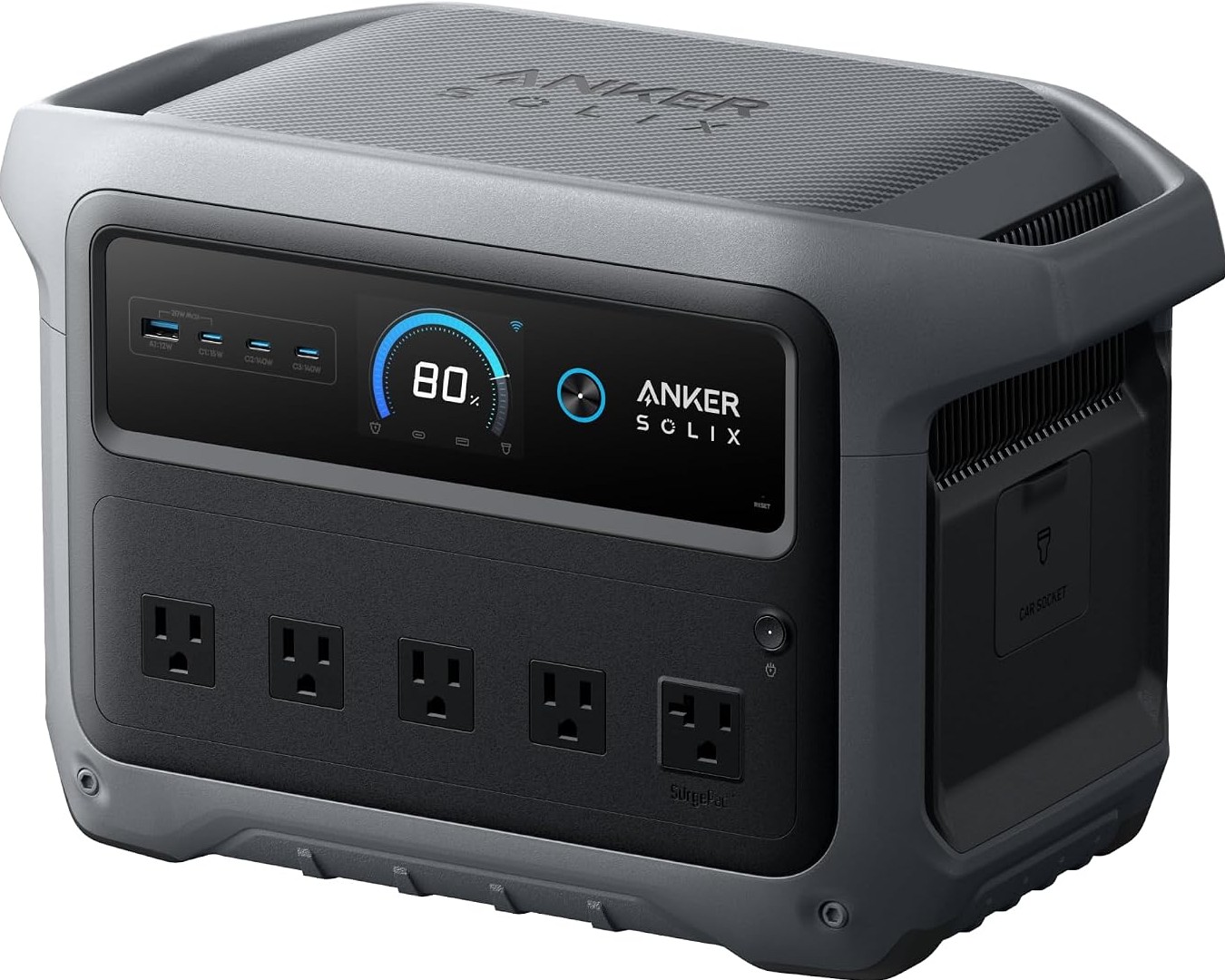
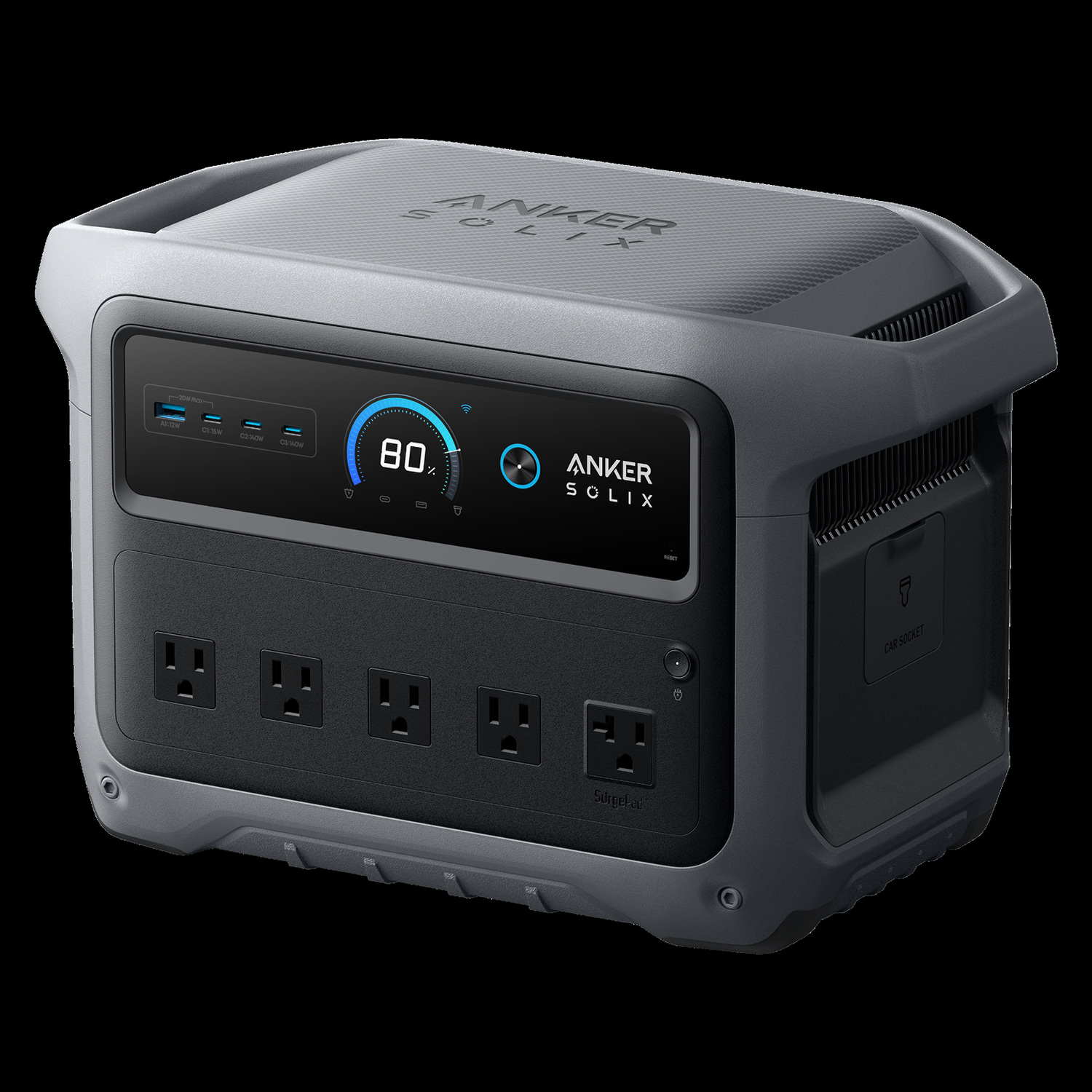
Anker SOLIX C1000 Gen 2 product imageAnker SOLIX C1000 Gen 2 product image 2Anker SOLIX C1000 Gen 2 product image 3

Anker

Best Sub-25 lb High-Output Unit

SOLIX C1000 Gen 2

Why choose it 2,000 W continuous output - the highest in any unit under 25 lb in the catalog.

Capacity1,024 Wh
Continuous output2,000 W
Weight24.9 lb
Solar input600 W

Watch out for Only 1,024 Wh, so high output pairs with modest runtime; not expandable.

#6
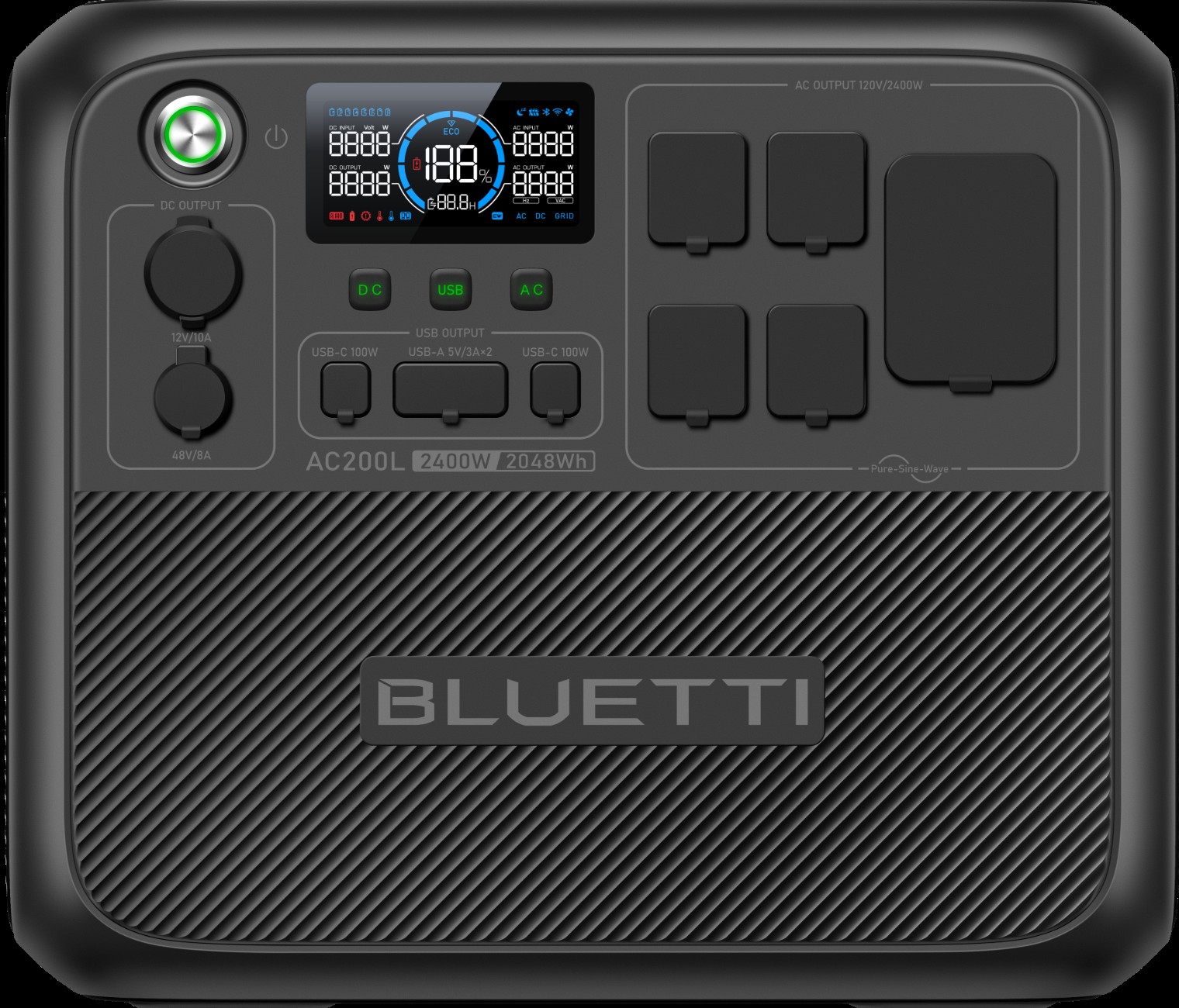
BLUETTI AC200L product imageBLUETTI AC200L product image 2

BLUETTI

Best Expandable All-Rounder

AC200L

Why choose it 2,048 Wh / 2,400 W with a native TT-30 RV outlet and documented expansion to 12,288 Wh.

Capacity2,048 Wh
Continuous output2,400 W
Weight62.4 lb
Solar input1,200 W

Watch out for Heaviest 2 kWh-class option here (62.4 lb); a long-term station more than a carry unit.

#7
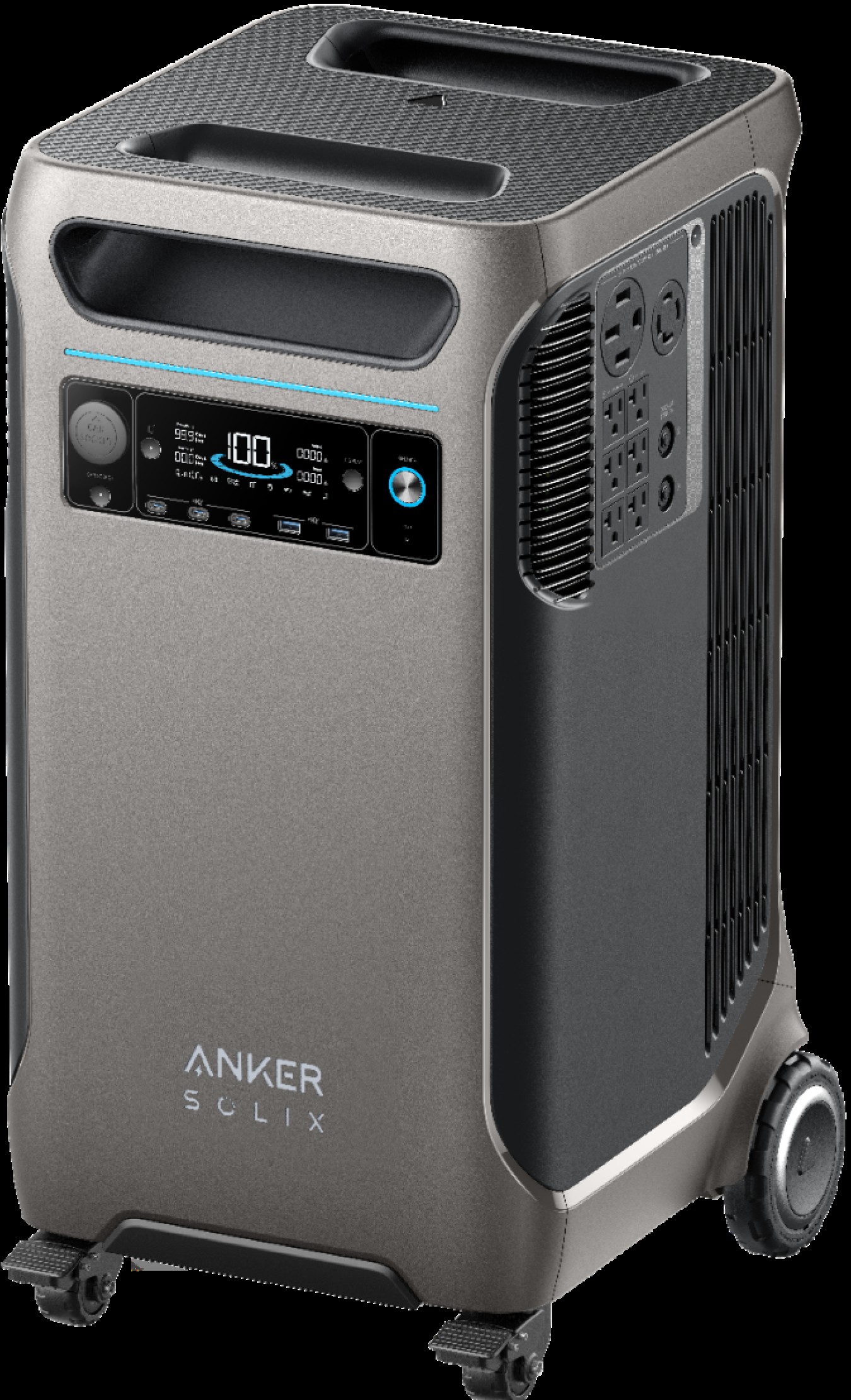
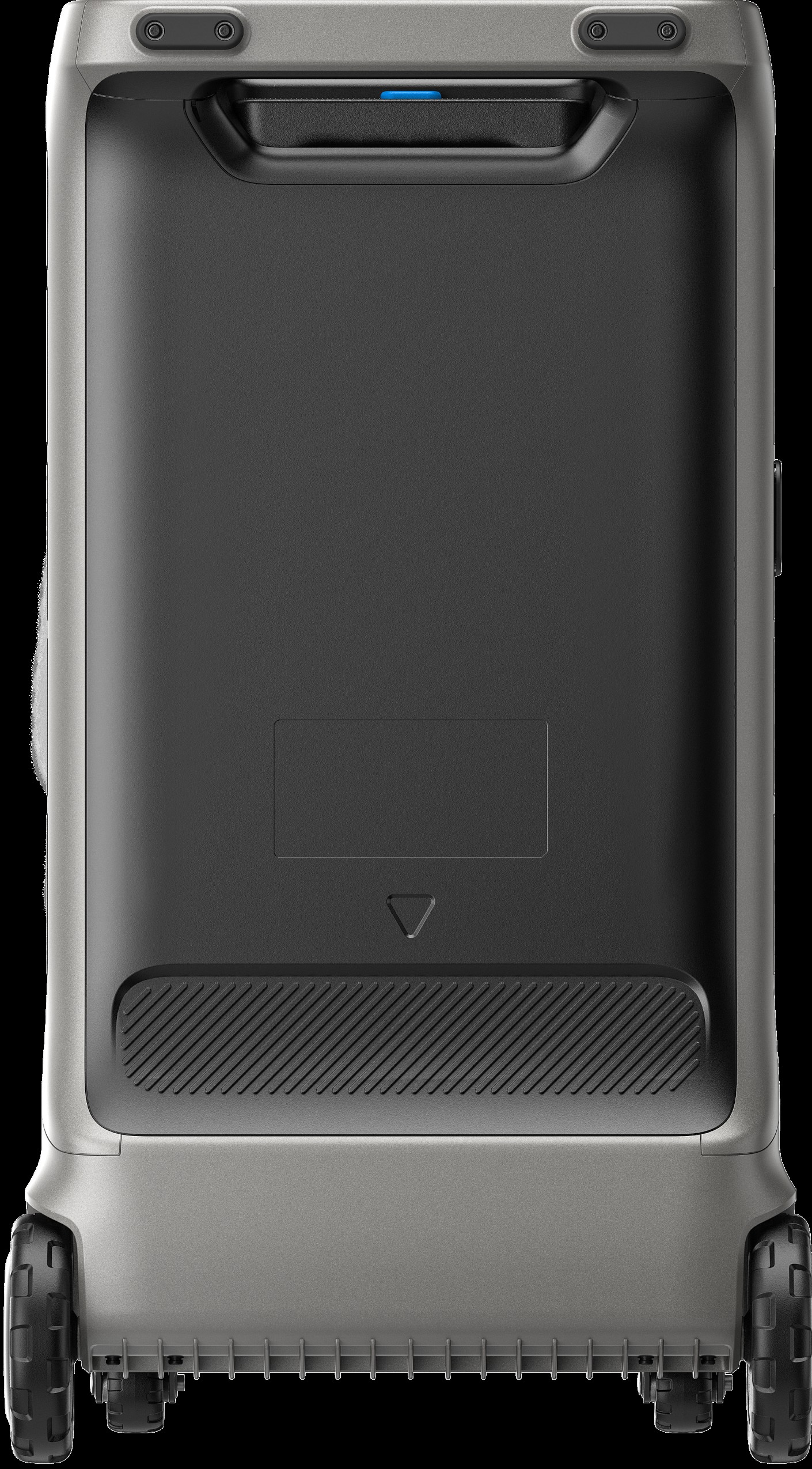
Anker SOLIX F3800 product imageAnker SOLIX F3800 product image 2Anker SOLIX F3800 product image 3

Anker

Best for 240 V Home Circuits

SOLIX F3800

Why choose it One of only three single-unit models documented for 240 V split-phase output; expands to 26,880 Wh.

Capacity3,840 Wh
Continuous output6,000 W
Weight132.3 lb
Solar input2,400 W

Watch out for 132.3 lb - effectively stationary; native TT-30 is not documented.

#8
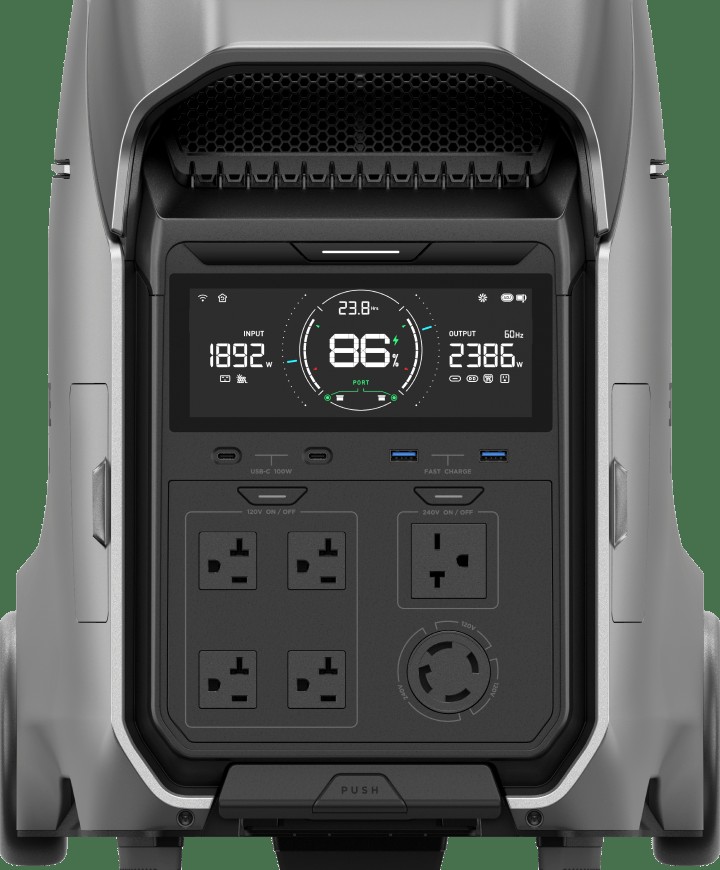
EcoFlow DELTA Pro 3 product imageEcoFlow DELTA Pro 3 product image 2

EcoFlow

Best Maximum-Capability Single Unit

DELTA Pro 3

Why choose it Every core capability documented in one unit: 4,096 Wh, 4,000 W continuous, native TT-30, single-unit 240 V split-phase, expansion to 12,288 Wh.

Capacity4,096 Wh
Continuous output4,000 W
Weight113.5 lb
Solar input2,600 W

Watch out for 113.5 lb - a permanent placement, with more output and capacity than casual weekend use needs.

#9
Jackery Explorer 5000 Plus product image

Jackery

Best Maximum-Expansion Unit

Explorer 5000 Plus

Why choose it 5,040 Wh base documented to expand to 30,240 Wh at 7,200 W continuous.

Capacity5,040 Wh
Continuous output7,200 W
Weight134.5 lb
Solar input1,200 W

Watch out for 134.5 lb base unit; a permanent installation, not a portable carry.

#10
EcoFlow DELTA 3 Classic product imageEcoFlow DELTA 3 Classic product image 2

EcoFlow

Best Entry-Tier 1 kWh Unit

DELTA 3 Classic

Why choose it 1,024 Wh and 1,800 W continuous at the simplest feature set of the DELTA 3 family.

Capacity1,024 Wh
Continuous output1,800 W
Weight26.6 lb
Solar input500 W

Watch out for Not expandable, and it carries the family's lower AC recharge rating (1,400 W), so runtime is base-only.

#11
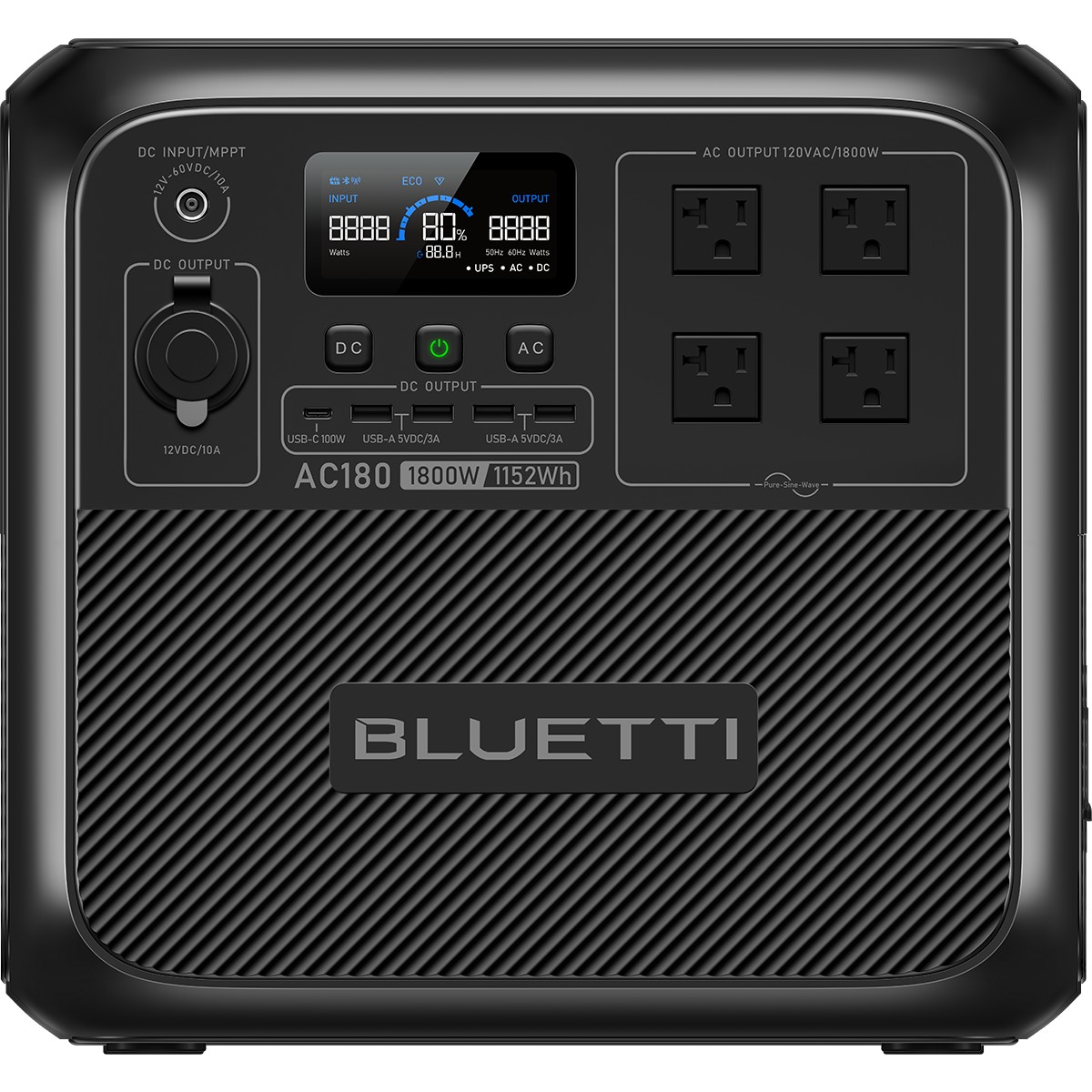
BLUETTI AC180 product imageBLUETTI AC180 product image 2

BLUETTI

Best Mid-Size Reference Unit

AC180

Why choose it 1,152 Wh / 1,800 W with documented expansion to 4,224 Wh - a useful midpoint between the 1 kWh travel units and the 2 kWh class.

Capacity1,152 Wh
Continuous output1,800 W
Weight35.3 lb
Solar input500 W

Watch out for At 35.3 lb it carries more weight per Wh than the 1,024 Wh models nearby.

Side-by-side

Compare the recommendations

ProductBest for (role)Capacity (Wh)Continuous output (W)Surge (W)Weight (lb)Max solar input (W)Expandable
Jackery Explorer 1000 v2Best Overall1,070 Wh1,500 W3,000 W23.8 lb400 WNo
DJI Power 500Best Lightweight / Small Loads512 Wh1,000 WNot documented16.1 lb300 WNo
EcoFlow DELTA 3 PlusBest for Fast Solar Recharge1,024 Wh1,800 W3,600 W27.6 lb1,000 WYes
BLUETTI Elite 100 V2Best Compact Unit That Can Grow1,024 Wh1,800 W3,600 W25 lb1,000 WYes
Anker SOLIX C1000 Gen 2Best Sub-25 lb High-Output Unit1,024 Wh2,000 W3,000 W24.9 lb600 WNo
BLUETTI AC200LBest Expandable All-Rounder2,048 Wh2,400 W4,800 W62.4 lb1,200 WYes
Anker SOLIX F3800Best for 240 V Home Circuits3,840 Wh6,000 W9,000 W132.3 lb2,400 WYes
EcoFlow DELTA Pro 3Best Maximum-Capability Single Unit4,096 Wh4,000 W8,000 W113.5 lb2,600 WYes
Jackery Explorer 5000 PlusBest Maximum-Expansion Unit5,040 Wh7,200 W14,400 W134.5 lb1,200 WYes
EcoFlow DELTA 3 ClassicBest Entry-Tier 1 kWh Unit1,024 Wh1,800 W3,600 W26.6 lb500 WNo
BLUETTI AC180Best Mid-Size Reference Unit1,152 Wh1,800 W2,700 W35.3 lb500 WYes

Match the guide to the job

Camping rewards lower weight and practical recharging. RV use adds connection questions. CPAP use needs device-specific planning. Home backup prioritizes sustained output, expansion and documented circuit capability.

Emergency and power-outage use

For outages, list the essential loads first and separate 120 V appliance backup from systems documented for 240 V circuits. Do not assume a large battery can connect to household wiring.

The tradeoffs that matter

More watt-hours usually add weight. Higher output does not guarantee longer runtime. Expansion can extend backup duration, but only where the manufacturer documents compatible batteries.

Shop by continuous output class

The 1000W guide covers 1,000–1,999 W continuous models. The 2000W guide covers 2,000–2,999 W models. Larger systems belong with home-backup decisions.

FAQ

Portable power station buying questions

Is a solar generator the same thing as a portable power station?

Usually it is a portable power station sold or used with solar panels.

What size portable power station do I need?

Match continuous output to the load, then size watt-hours for the duration you need.

How long will a portable power station run my fridge?

Runtime depends on the refrigerator’s real energy use and cycling; product capacity alone cannot provide a reliable answer.

Can I take a portable power station on a plane?

Most power stations exceed normal airline battery limits; confirm the battery rating and airline rules before travel.

What does the entry tier miss compared with larger units?

Entry-tier units usually trade capacity, output, ports or expansion for lower size and weight—not necessarily a lower current price.