Home backup guide

Best Portable Power Stations for Home Backup

Decide whether you need a few essential appliances, a larger expandable backup base, or documented household-circuit capability. These are different levels of outage protection.

Decide what you are actually protecting

Start from the level you need: keeping a few essentials running through a short outage, covering a whole evening, or powering household circuits — which requires documented voltage capability plus proper integration equipment. These are different jobs, and the biggest battery is not automatically the right answer.

Make a short list of essential loads

Write down what has to stay on — refrigerator, phones, lighting, medical equipment — and note the running and startup power of each. Sizing from that list helps you avoid both buying too little and paying for capacity you will never use.

Buying recommendations

8 home-backup options

8 products

#1
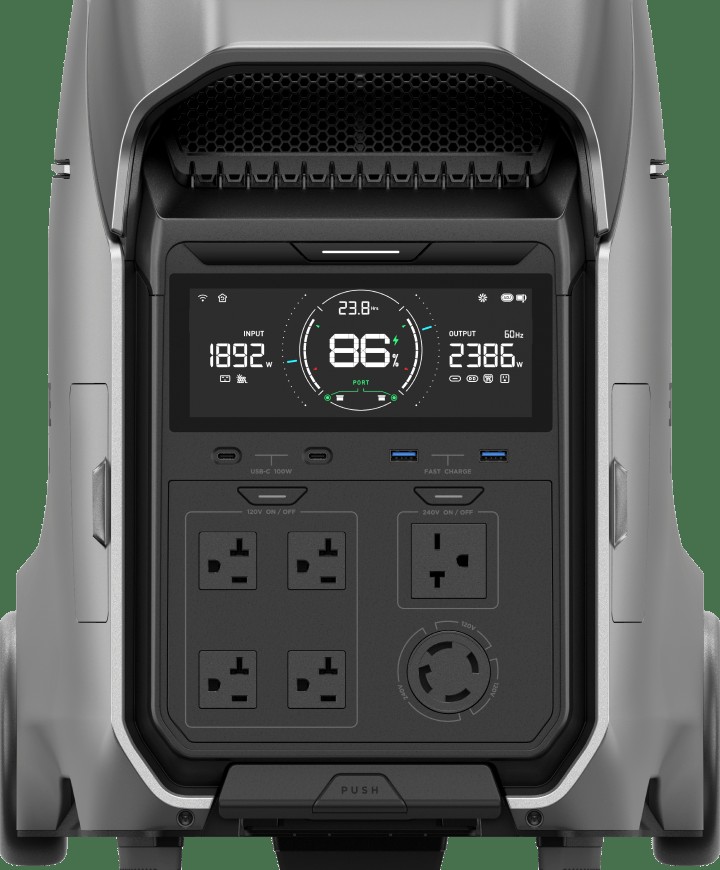
EcoFlow DELTA Pro 3 product imageEcoFlow DELTA Pro 3 product image 2

EcoFlow

Best Overall for Home Backup

DELTA Pro 3

Why choose it Every core home-backup dimension documented in one unit: 4,096 Wh, 4,000 W continuous, single-unit 240 V split-phase, native TT-30, expansion to 12,288 Wh.

Capacity4,096 Wh
Continuous output4,000 W
Weight113.5 lb
Solar input2,600 W

Watch out for 113.5 lb - a permanent placement rather than something you move between rooms.

#2
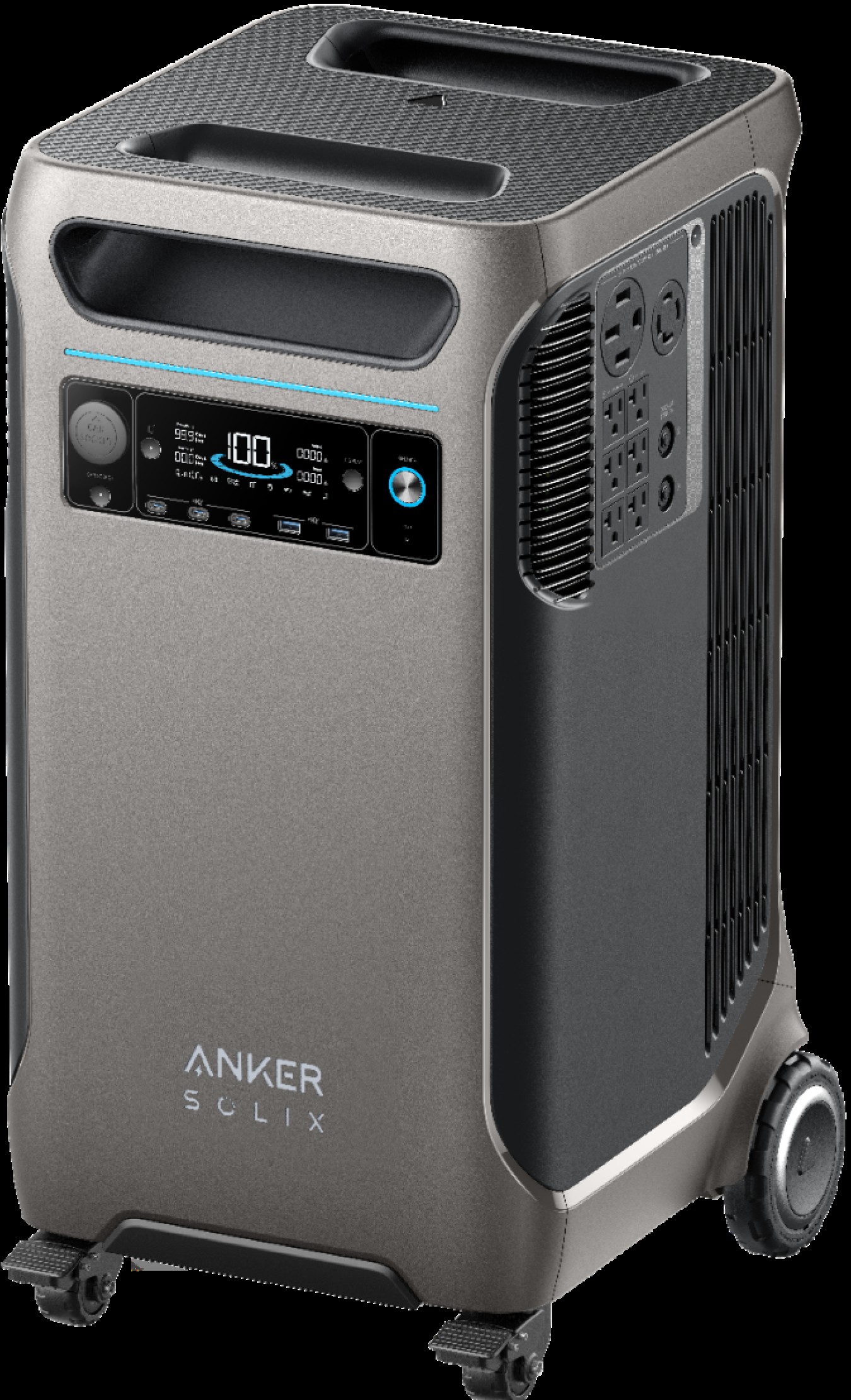
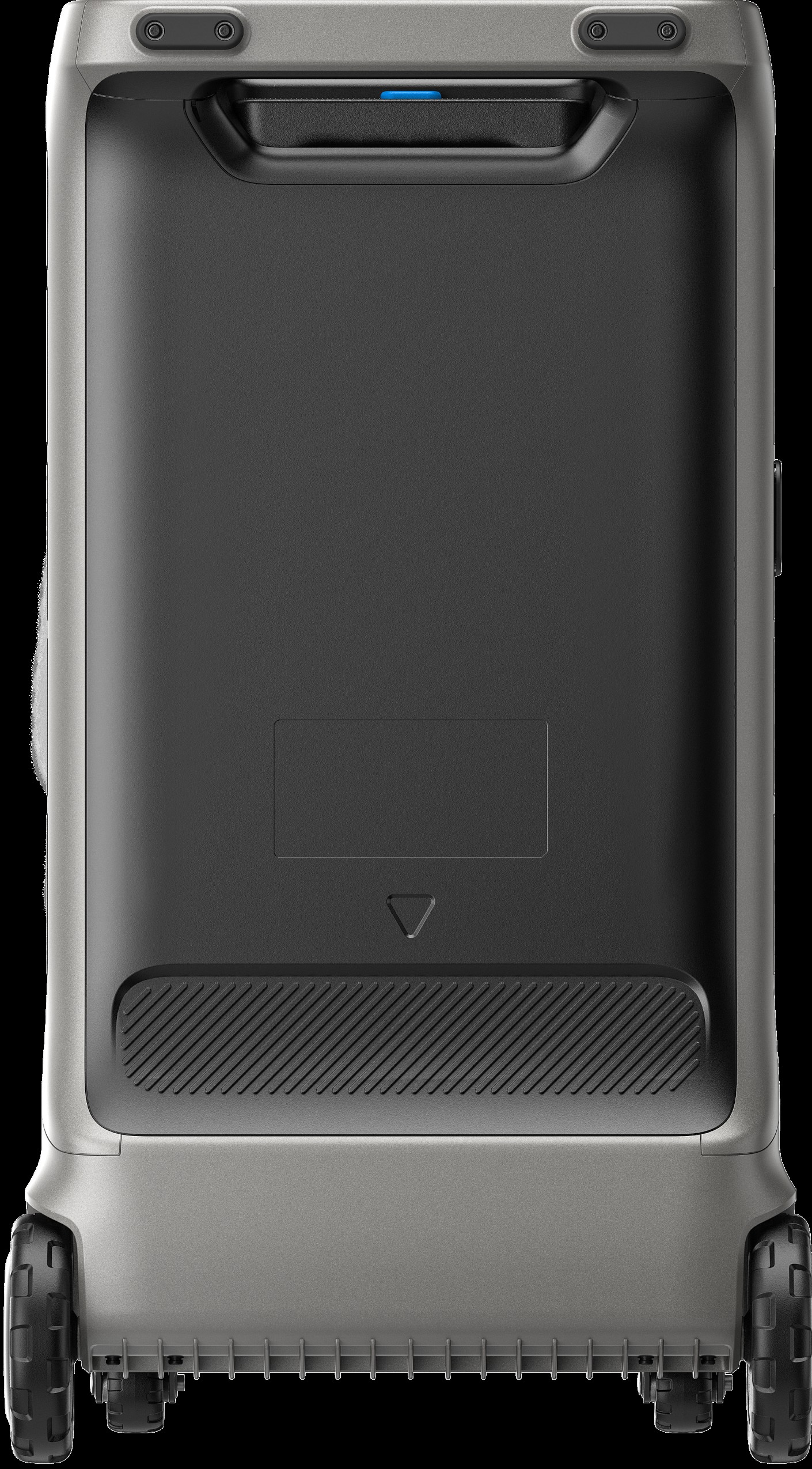
Anker SOLIX F3800 product imageAnker SOLIX F3800 product image 2Anker SOLIX F3800 product image 3

Anker

Best for 240 V Circuits (home-backup class)

SOLIX F3800

Why choose it Documented single-unit 240 V split-phase output with 6,000 W continuous and expansion to 26,880 Wh.

Capacity3,840 Wh
Continuous output6,000 W
Weight132.3 lb
Solar input2,400 W

Watch out for 132.3 lb; not a unit you relocate once placed.

#3
Jackery Explorer 5000 Plus product image

Jackery

Best Maximum-Expansion Home-Backup Base

Explorer 5000 Plus

Why choose it 5,040 Wh base documented to 30,240 Wh with 7,200 W continuous - the largest documented expansion ceiling on this page.

Capacity5,040 Wh
Continuous output7,200 W
Weight134.5 lb
Solar input1,200 W

Watch out for 134.5 lb base unit and integration hardware is a separate decision; no TT-30 outlet is documented for it.

#4
EcoFlow DELTA 3 Ultra product image

EcoFlow

Best High-Output Single Unit Without 240 V Documentation

DELTA 3 Ultra

Why choose it 3,072 Wh at 3,600 W continuous with expansion to 11,000 Wh.

Capacity3,072 Wh
Continuous output3,600 W
Weight72.1 lb
Solar input800 W

Watch out for 240 V capability is not documented for this unit - do not assume it can feed 240 V circuits.

#5
Jackery Explorer 2000 Plus product imageJackery Explorer 2000 Plus product image 2

Jackery

Best Mid-Tier Expandable System

Explorer 2000 Plus

Why choose it 2,042 Wh / 3,000 W expanding to 12,256.8 Wh - mid-size entry into real battery-backed uptime.

Capacity2,043 Wh
Continuous output3,000 W
Weight61.5 lb
Solar input1,400 W

Watch out for No documented 240 V; UPS switch time is not documented despite rated support.

#6
EcoFlow DELTA 3 Max Plus product image

EcoFlow

Best Compact 3,000 W-Class Output

DELTA 3 Max Plus

Why choose it 3,000 W continuous from a 2,048 Wh / 48.7 lb body with expansion to 10,000 Wh.

Capacity2,048 Wh
Continuous output3,000 W
Weight48.7 lb

Watch out for Max solar input is not documented, limiting multi-day outage recharge planning.

#7
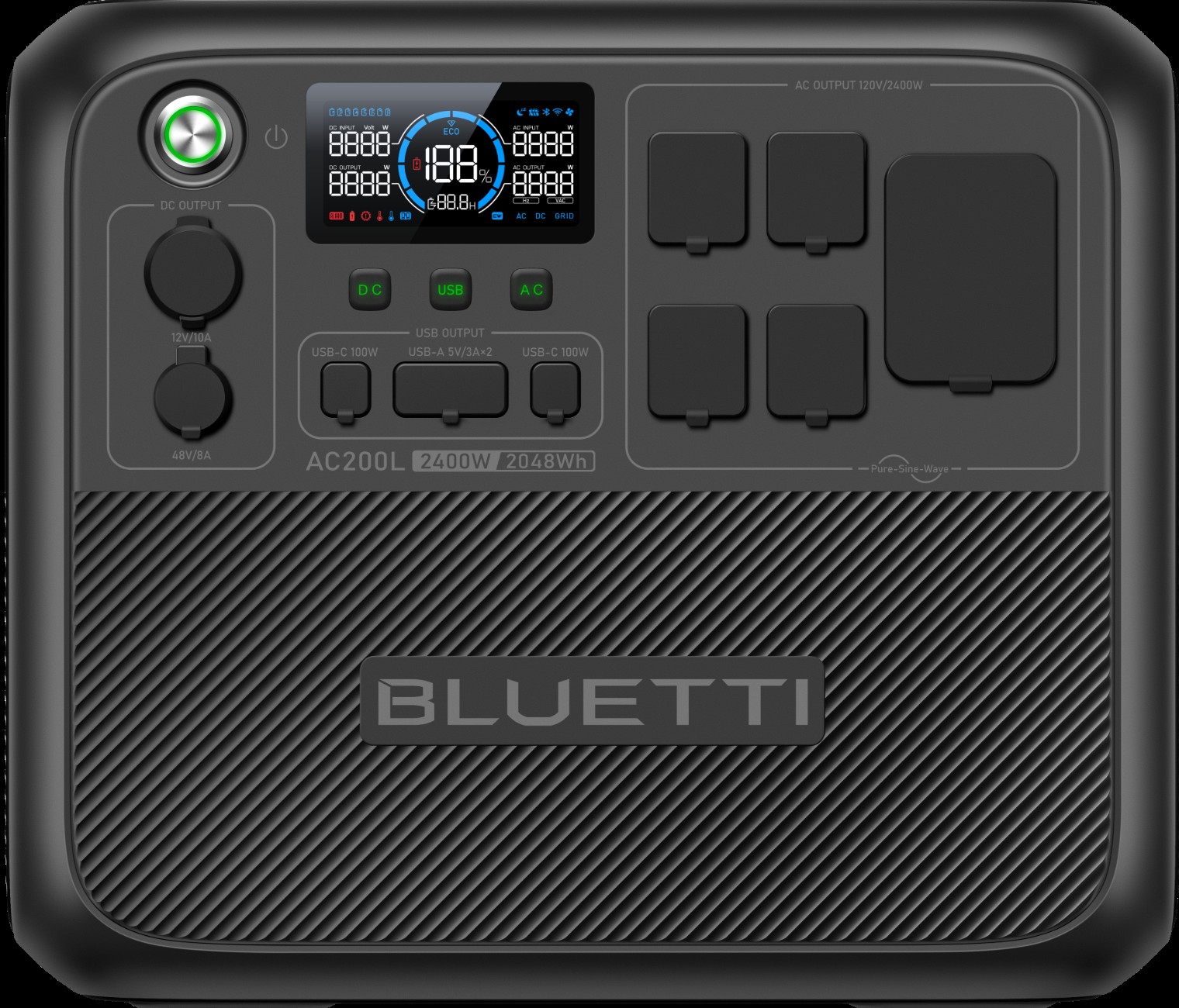
BLUETTI AC200L product imageBLUETTI AC200L product image 2

BLUETTI

Best Entry-Tier Home-Backup Unit

AC200L

Why choose it 2,048 Wh / 2,400 W expanding to 12,288 Wh with a native TT-30 outlet at the lower end of this set.

Capacity2,048 Wh
Continuous output2,400 W
Weight62.4 lb
Solar input1,200 W

Watch out for 62.4 lb and no documented 240 V - this is 120 V appliance backup, not circuit backup.

#8
Jackery HomePower 3000 product image

Jackery

Best for Documented Electronics Switchover

HomePower 3000

Why choose it 3,072 Wh / 3,600 W with documented UPS/EPS support at a 20 ms switch time - connected electronics see a brief blip rather than a restart.

Capacity3,072 Wh
Continuous output3,600 W
Weight59.5 lb
Solar input1,000 W

Watch out for Not expandable, and no documented 240 V - runtime and circuit scope are both fixed.

Side-by-side

Home-backup capabilities compared

ProductContinuous output (W)Surge (W)Capacity (Wh)120/240 V capabilityExpandable to (Wh)UPS/EPS documentedBackup tier
EcoFlow DELTA Pro 34,000 W8,000 W4,096 WhNot documented12,288 WhNot documentedExpandable backup
Anker SOLIX F38006,000 W9,000 W3,840 WhNot documented26,880 WhNot documentedExpandable backup
Jackery Explorer 5000 Plus7,200 W14,400 W5,040 WhNot documented30,240 WhNot documentedExpandable backup
EcoFlow DELTA 3 Ultra3,600 W7,200 W3,072 WhNot documented11,000 WhNot documentedExpandable backup
Jackery Explorer 2000 Plus3,000 W6,000 W2,043 WhNot documented12,257 WhNot documentedExpandable backup
EcoFlow DELTA 3 Max Plus3,000 W6,000 W2,048 WhNot documented10,000 WhNot documentedExpandable backup
BLUETTI AC200L2,400 W4,800 W2,048 WhNot documented12,288 WhNot documentedExpandable backup
Jackery HomePower 30003,600 W7,200 W3,072 WhNot documentedBase onlyNot documentedAppliance backup

240 V capability must be documented

Do not assume a high-output station can supply 240 V circuits. Transfer-switch and integration compatibility must also be verified separately.

Portable backup is not automatically whole-home backup

A large expandable station can support more loads, but it does not become a permanently installed whole-home battery without the required documented system design.

Plan refrigerator and medical-device continuity carefully

Account for startup demand, actual energy use and the station’s documented switchover behavior. Unknown switch behavior is not a promised UPS function.

FAQ

Home-backup questions

Can a power station run my house during an outage?

Most are best treated as selected-load backup unless household-circuit integration is explicitly documented.

What essential loads can it support?

Add continuous and startup demand for the exact appliances you plan to connect.

Do I need 240 V?

Only for loads or circuits that require it; many essentials are 120 V.

Can it connect to a transfer switch?

Only with documented compatible equipment and qualified installation where required.

Is it the same as a whole-home battery?

No. Portable and installed whole-home systems have different integration requirements.

How long will essentials run?

Duration depends on actual load energy use and available watt-hours.