Size for Your Trip
Charging phones, lights and cameras requires a different energy plan from running a powered cooler. Choose capacity based on your equipment and daily consumption.
 WattSift
Camping Buying Guide
Choose a camping power station around your trip length, devices and charging options. Aim to cover your actual power needs without carrying unnecessary weight.
Charging phones, lights and cameras requires a different energy plan from running a powered cooler. Choose capacity based on your equipment and daily consumption.
Lighter units are often more practical for short trips. Larger capacity may make sense at a fixed campsite or on longer trips, depending on how you transport the station.
Published solar input is a maximum acceptance rating, not a guaranteed charging result. Weather, panel positioning and daylight determine actual collection.
Buying recommendations
8 products
Why choose it Lightest pick that still delivers full 1,000 W continuous output (16.09 lb) - every camping-relevant spec is documented: 512 Wh, 1,000 W continuous and 300 W solar input.
Watch out for 512 Wh is a short-trip or electronics-only budget.
Why choose it A class-topping 1,000 W solar input paired with a 1,500 W AC recharge - the fastest documented recharge combination in this cohort.
Watch out for At 27.6 lb plus its size it is a basecamp unit, not one you carry far.
Why choose it Best capacity-to-weight balance for most camping trips - 1,070 Wh in 23.8 lb with 1,500 W continuous.
Watch out for Not expandable - longer trips need solar or a larger unit rather than add-on capacity.
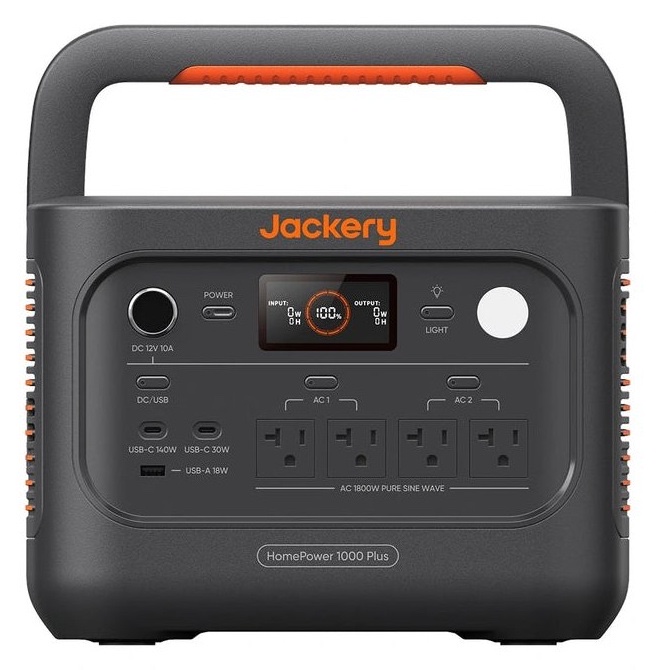
Why choose it At 23.8 lb, it combines a 1,024Wh battery, 1,800W output and expansion up to 11,000Wh in a relatively easy-to-move package.
Watch out for Its 400W solar ceiling is modest beside the higher-input options on this page.
Why choose it DELTA 3 combines a manageable 27.6 lb weight with 1,024Wh, 1,800W output and 500W solar input, making it a straightforward balance for everyday campsite loads.
Watch out for Its 500W solar input leaves less recharge headroom than the higher-input options on this page, while the 1,024Wh capacity offers less long-duration reserve than larger expandable systems.
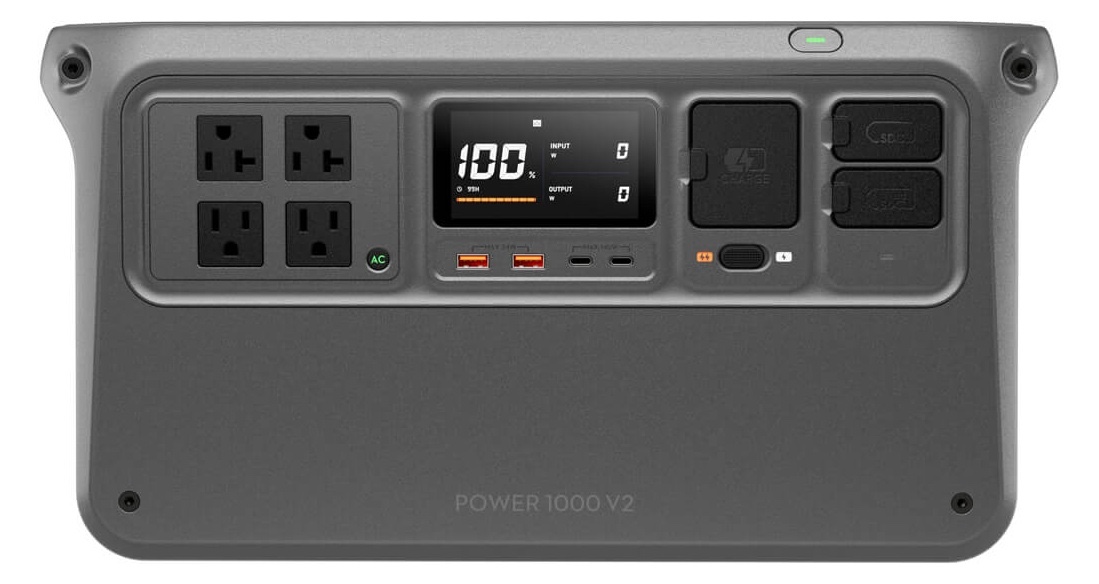
Why choose it For campers who expect heavier appliances or faster daytime replenishment, its 2,600W output and 1,800W solar input provide strong power and recharge headroom in a 1kWh-class unit.
Watch out for At 31.3 lb, it trades some portability for that power and solar headroom; a verified surge rating is not currently available.
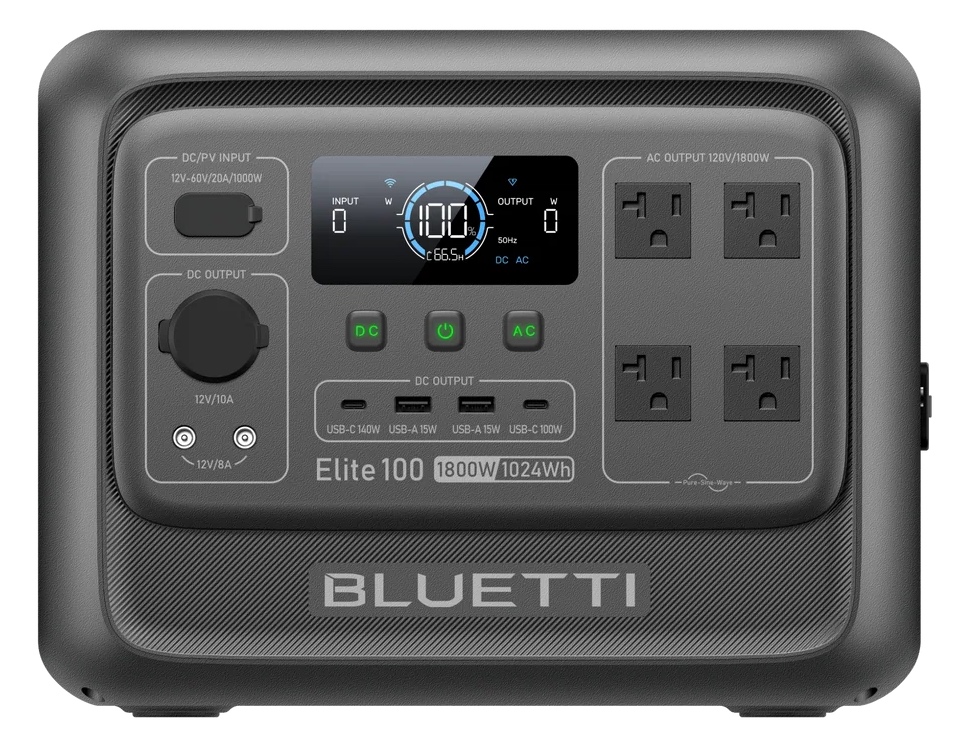
Why choose it 1,024 Wh / 1,800 W at 25 lb and accepts expansion batteries.
Watch out for Maximum expanded capacity is not published by BLUETTI, so its ceiling is undocumented.
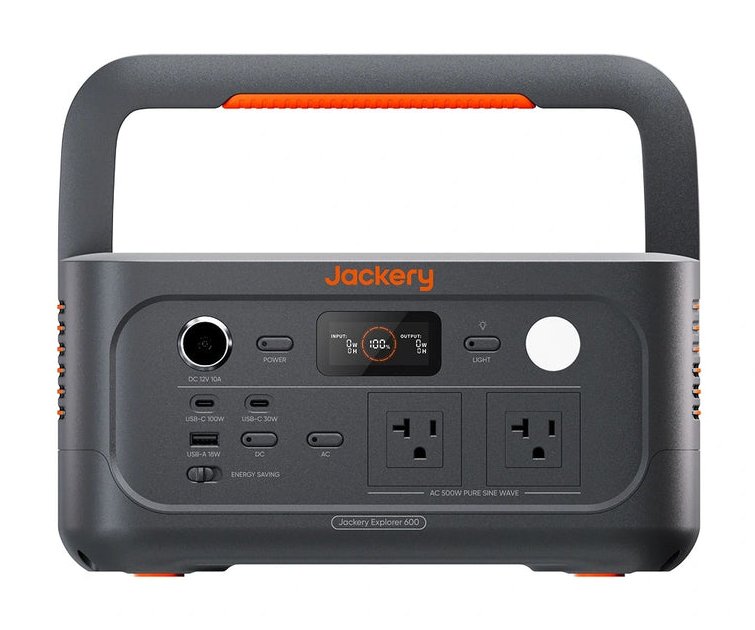
Why choose it 640 Wh at 14.11 lb - the lightest unit here above 512 Wh.
Watch out for 500 W continuous limits it to low-draw gear; no high-power appliance headroom.
| Product | Weight | Capacity | Continuous output | Solar input | Current price |
|---|---|---|---|---|---|
| DJI Power 500 | 16.09 lb | 512 Wh | 1,000 W | 300 W | $377.00Winner |
| EcoFlow DELTA 3 Plus | 27.6 lb | 1,024 Wh | 1,800 W | 1,000 W | $719.00 |
| Jackery Explorer 1000 v2 | 23.8 lb | 1,070 WhWinner | 1,500 W | 400 W | $559.00 |
| Jackery HomePower 1000 Plus v2 | 23.8 lb | 1,024 Wh | 1,800 W | 400 W | $749.00 |
| EcoFlow DELTA 3 | 27.6 lb | 1,024 Wh | 1,800 W | 500 W | $579.00 |
| DJI Power 1000 V2 | 31.3 lb | 1,024 Wh | 2,600 WWinner | 1,800 WWinner | $469.99 |
| BLUETTI Elite 100 V2 | 25 lb | 1,024 Wh | 1,800 W | 1,000 W | $499.00 |
| Jackery Explorer 600 v2 | 14.11 lbWinner | 640 Wh | 500 W | 200 W | $420.00 |
Select 2 or 3 products manually.
0 of 3 selected
Choose products to compare.